
It Is How You Think
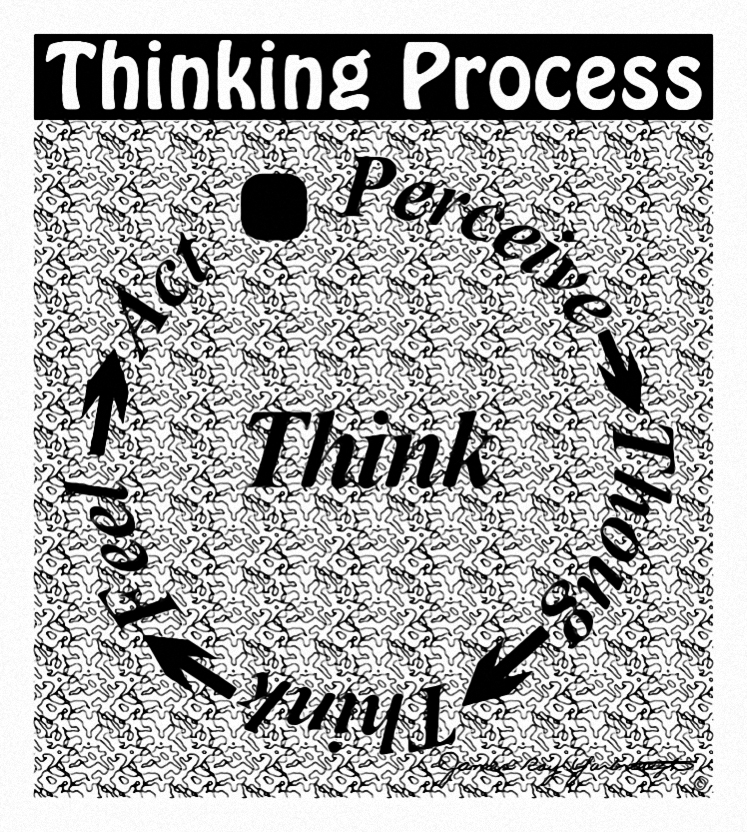
You Feel and Act How You Think
What Does Love Mean to You
You love me, I love you. Now what are we going to do.
Why Do You Do It


To Tell the Truth
The more room you have to lie, the less room there is to tell the truth.
It is said that all of us will tell a lie at some given time. It may seem that way to those who do. It is not an absolute truth and should not be taken as a given. You will think to your highest thoughts or stoop to your lowest. These are the things you must decide. If you feel you have to lie, then that is what you will do. When you don’t want to say what is true, do not say a thing; though, you will be telling a lie to yourself. That is the only lie that we all might tell.
A truth does not come from a lie, and a lie does not come from a truth. A lie is baggage that is with us until we tell the truth. It is with us no matter where we go or whom we are with at the time. You must get rid of it, and until you do, you will not be the true you. You know, the person who you were created to be, the real you. A lie lives on until the truth is told. There is no win over the truth. Though the truth may be challenged, it has no equal. With a lie as your friend, you are your worst enemy.
You cannot say a lie is not a lie if you do not know the truth. The truth is the only thing that you can tell that you know will not change. There is not a thing that last that can be built without it. Once it is told, the truth will not change what a lie has done. Though, living the truth will make lies fade. With time, they will lose their strength.
The truth will not undo a lie. It is the same with our past. We must acknowledge our past, good or bad, and then leave it there. Living in the past will not change the present. The past will always be the past it will not be changed. And the present will always be now. So will the future when we get there. The greatest truth that we can tell is to ourselves. If we live the truth, there will be no need to lie to anyone. It is a great challenge to hold on to success when our thoughts are based on lies. What we think and how we act will be the same.
The core of the truth is elastic in the sense that it can be stretched; though, only so far. If it is stretched beyond its limit, it will be a lie. The truth is always known. That is, even if it’s just you who knows. Why not tell it. It should be told for all that it is worth, and one thing for sure, a price cannot be put on it. We must be willing to hear the truth and to tell it. And if you want to help your Self, never run from it. For no matter how long or far you run it is a race that cannot be won. Nor should one want to. Not all has to be told, but what is told should be the truth. It relieves the load and puts the mind at ease. A lie has no comfort zone. It is always running and trying to hide.
It is Not Enough to Say I Am Sorry
You should know what you do to others and yourself when you do not tell the truth. It is not a mistake, it is wrong. Why can a lie not be a mistake? A lie is an intended act that will cause harm. A mistake can cause harm as well. But it is not done on purpose. There is something wrong with how we live our life when we think we have to lie. It is offered up for different reasons; though, it does not change the fact that it is still a lie.
I have always tried to tell the truth. Life is better for me when I do. There have been times when I told the truth and no one would believe me. It took a while for me to understand why. You cannot tell the truth to one who lives a lie. They will not know it when they see it, because their mind will not let them believe. If I lie to you, I cannot believe your truth. When we live a lie, we are separated from what is real. The trouble with a lie is that it will not let you see the truth. That is, until you do. What is it when you tell a lie but think it is the truth? It means, you should know the company that you keep starting with yourself. And say not a word until you know. A lie is dangerous and a hazard to your health. You are not safe when it is present.
What is it when you say yes but you feel no. Is it a lie to say you care, all the time knowing that you do not? Does it hurt more, or less to know the truth. A lie is meant to mislead. It can, and often does, create a world of make-believe. This is a place where no one is living the truth, the teller or the told. The thing is, one of them should know the truth; though once a lie is told, how can you know. You can start to believe it, which is another lie. From the clothes we wear to the products that we buy, much of it is a lie. And a lie will always do damage. It is hard to know where you are going or where you have been. Should you stay or should you go.
Who are you when you shed your garments and your “face?” It is you. I will not be true in what I do, if you are not true in what you do to me. If I think I love you, and you have not told the truth, then my love is a lie. And that is if I know it or not. A lie will not support the truth. It is a lie when we will not allow ourselves to see this. It is the greatest lie of all when the way we act is a lie. It is not a mistake.
A mistake is not made by the conscious part of the mind. Its roots are in the base of our thoughts. It is not made on purpose. There is no motive. When and where we make our mistakes is all about how we feel. When we feel good about ourselves, mistakes are few. We take care with what we say and do, there will be no need to say I am sorry. I made a mistake.
Both lies and mistakes are acts of thought and are harmful to those who are touched by them. A mistake is no less harmful than a lie. Just as with a lie, it can be the cause of damage. It must be made right or it will. Once touched by either, you will be harmed in some way. They cause many of the bad things that happen in our lives. Even so, they can be followed by what is right.
You do not try to make a mistake. If you did, it would not be a mistake. It would a thing you did with some thought. When what you do is thought out, it is not a mistake when a thing goes wrong. It is how you think that is the problem. A mistake is caused by a thought that you are not aware that you have. It is not a conscious thought. This sets off an action. What you have then is the mistake. It is not one, though, until it is known. At least one person must know that it exists. If not, it can be made again. You do not make a mistake that you know of more than once. If you do, it is not a mistake. It is done on purpose whether you say so or not. You do have thoughts that you are not conscious of and they distract you from what you are doing. They cause you not to pay attention. If it is not important to you, it is not a thing you should do. The mind will not engage, as it should. This will not let you do it right. You have to focus, but not a thing will help if you are not ready.
What you do now is what you should focus on. You can think about many things, but you focus on one at a time. To try to do more could cause a mistake. To think that it is a special skill to do more than one thing at time is misleading, at best. It takes no special skill to multitask. You do not need any special know how to do more than one task at a time. The effort is shared, which takes away from the whole of each. Just as you can see more than one thing, you can only focus on one at a time. That is, unless they are the same kind. If not, you will be drawn to the difference. You can do more than one thing at a time but will not think more than one thought at a time. Try it. Sit two or more things together and focus. Your mind will shift from one to the other.


A Time to Remember Part II
The Fire This Time
“The Negroes of this country may never be able to rise to power, but they are very well placed indeed to precipitate chaos and ring down the curtain on the American dream.” This is a quote from James Baldwin’s book The Fire Next Time.

And so it was.
Just a short four years later, in the nation’s Capital, I would be standing in the midst of what seem like hell on earth. Some were running, stumbling and falling. Others held on to all that they could as they ran in and out of the shops and stores. More than a few made sure there would be nothing left to burn. Even the bricks were ablaze and crumbling. They were all ages, sizes and shapes, but the one thing they had in common, they were all Black. The area was off-limits to military personnel who were not part of the operation. But I figured out a way around the restriction. I would don my government issued fatigues—our green non-dress uniform—to blend in.

Armed soldiers and military personnel were shouting orders but no one seem to be listening. They took no steps to stop the protesters. Their orders were to stand by, with weapons pointed down. Even as the buildings continued to burn, in places a corridor of flames, they stood by. The heat was intense, only matched by the intensity of the expressions on the faces of the young, and old alike, who were carting off as much as they could carry. It was a free for all. Though there was no doubt in my mind that some of them were there because of their anger. Dr. Martin Luther King had just been assassinated by the system in the form of James Earl Ray. You could expect no less. Oh the irony, when all the smoke cleared and the flames had been doused the guided as well as the misguided were left living among the ashes. The rage had given in to despair. The Black low-income neighborhoods had been reduced to ruin.

Just a few months before his death, Dr. King and leaders of the Southern Christian Leadership Conference (SCLC) held a meeting to plan and organize a Poor People’s Campaign for the coming spring in Washington, D.C. Organizers intended for the campaign to be a peaceful gathering of poor people from communities across the nation. They would march through the Capital and visit various federal agencies in hopes of getting Congress to pass substantial anti-poverty legislation. They planned to stay until some action was taken.
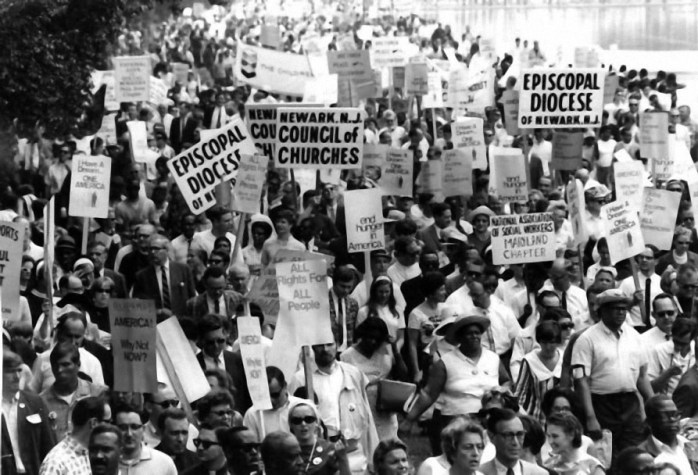
The Poor People’s Campaign did not focus on just poor Black people but addressed all poor people. As history records, before their plans could be realized, Dr. King was cut down by an assassin’s bullet. Although feeling the sorrow of his death, a decision was made to carry on with the campaign. On May 12, 1968, the first wave of demonstrators arrived in Washington. One week later, Resurrection City was built on the Washington Mall. This was a ramshackle settlement of tents and shacks to house the protesters. And as I learned firsthand, to call it housing is being generous, at best.

This time I decide I want to take a close look at the other side of the protest, though still up close, but more personal. I had to focus my mind to take in what my eyes were seeing. Some wandered about with a sort of dazed look as just waking up to a bad dream, while others seemed to seek solace and refuge in their primitive accommodations. It was clear, to me, that most were taking on the symptoms of defeat. It would not take much—under these conditions—to become demoralized. People were hungry; there was not much food or at least an orderly way of providing it to those who needed it most, the young and the old. And there was mud all over and if you did not have boots, and most did not, you had to secure your shoes some place and do your moving about in bare feet. It was a mess. The mud seemed knee-deep in places. This was the heart of the “Poor Peoples” encampment. I went as I go to many other places. I was just curious, not much more than that. But what I saw caused me to return.

It was, to put it simply, a hopeless situation no matter how well intended. The King has died. There was a leadership vacuum; it could not be overcome. The best that I could do was pick several out of the multitude to take to the base for a hot meal and a break from the drudgery of living in such inhospitable conditions. And in two short weeks, I would be discharged from the Air Force and out in the “real world” myself. How was I to know though, that Chicago would be my next destination. Here destiny would step forward once more. Her hands were waving my way. I did not know if I was creating my destiny or it was being laid out for me. Either way, I would be there to see it all. It was not a plan, it just happened.

This is Chicago the time and place that the SCLC would try to resurrect the Poor People Campaign. It was not to be. The eyes of the nation were focused on the Democratic National Convention, the “other” event. Fate had dealt its hand and the cards had been played. It was inescapable, the end of the civil rights era was drawing to a close. There would be a last gasp and a whimper from the Black Power movement to be replaced years later with the rap and hip-hop culture. The sign of greeting is no longer Soul Brother, it has been replaced by my nigger. As it is plain to see, it was a turn by degrees for the worst. If they could only see us now. Time stands still as life moves on. Now here we are.
August 26 to August 29, 1968
I came here to Chicago to find a job, and see my father for the first time. Both of the things I did do. Even so, my mind would not let me rest. I could not resist the draw of the action on the streets leading up the 1968 Democratic National Convention. The convention was held during a year that would be remembered as a wakeup call and a warning to our nation. How easily it seems for us to forget.
Headline 2012: The Pentagon Is Offering Free Military Hardware to Every Police Department in the US
It was a social revolution with no blueprint. The Viet Nam war was in full force, and American “politics” had become a dangerous game in my lifetime. First, there was Dr. Martin Luther King on April 4 and the civil unrest that followed. Two months after Dr. King’s death on June 5, as if timed by fate, came the murder of Democratic presidential hopeful Senator Robert F. Kennedy. Was all of this some kind of test? Yes, it was, and the grades are still coming in. For me, it was as if I had been programmed—I did not think of this then—to be an up close witness to the contest of what is and what is not. I had to be there and did not know it, and had no choice. I quit my job not really knowing why.

My 21st birthday marked the beginning and what soon followed is best described as police brutality and all out “war” on the protesters. It was people control, a step to the future that could not be taken back. There were no hot burning flames of the riots in Washington. The soldiers in Washington had been ordered to stand at ease. It appeared that Mayor Daley had issued orders to “attack and destroy.” And they were followed to the letter. Even bystanders were not safe from the swinging batons if they could not run fast enough.

There were indiscriminate beatings it mattered not male or female, young or old they were routinely clubbed bloody. It was as close as you could get to gender equality. No one was exempt. One scene that was hard to put out of my mind was that of a young female protester—with blood streaming down her ashen face—being dragged by her long blond hair; she was in shock. At this point, she had gone limp the “fight” had been beaten out of her. The only sign of life was a grimace and a moan when her head was allowed to hit the pavement. The cop only let go when he realized the cameras were trained on him. Up to then, it was “caveman.” It was not the Chicago that I had come to love. I would soon be on my way home to Arkansas, I had seen enough. I now had the space to distance myself from the images in my mind.
A Time to Remember Part 1
Wanda Roach
I remember writing a letter to my brother telling him about Otis Redding‘s death. Shortly afterward, January 24, 1968, Carthell McHenry was killed in Viet Nam, Dr. M. L. King was assassinated April 4, 1968, and Robert Kennedy in June of ’68. Those were trying times.

James R. Yarbrough
Yes, I lived those days up close and personal. I was in the Air Force and stationed at Andrews AFB just outside Washington D.C. The base is known as the presidential base. Air Force One and the President’s other air transports are based there. Carthell was my classmate at Lafayette and we, through fate, were stationed near each other in the military. He and I would get together when we could. He was stationed in DC at the Marine’s honor barracks. He was an honor guard and never would have been assigned to Viet Nam. When he told me that he was going to volunteer to go I all but pleaded with him not to.
He was determined, for reasons only he would know for sure; though, I believe it to have its roots somehow in his childhood. Fate has two hands. I left on leave and when I returned he was already in Viet Nam. As I remember, he was only there for a day or two before he was killed. I am going to post my account of those days, on FB, and make sure to share to the Lafayette page. This I will do today. Thanks so very much for your comments, they brought back memories of days I will never forget. They are engraved in my memory.
Peace
My Blog Home Page: itishowyouthink.com

The Journey Starts Here
Why We Feel the Way We Do
You may ask, what could motivate some of us to do what we do. The thing we can do to know the answer, is to know it when we see it. We are the gatekeepers of our mind. What I say now and what I will be saying is not academic. I simply look at life in a way you may never have. And I will give you answers to questions that you did not know you ever had. It is how I see the world and life as it was given. From the beginning to the end, it is all about life, and how we think.
What I have to say is not fiction it is about life and our existence, as I believe it to be. It is not about what you have been told. It is about the way that it is. What is here will help you to know that to see, you must look. You may, see you in what I have to say. When you do not, maybe it will be someone you know and love that comes to mind. Or perhaps one of those troubled souls who you see act out their hurt in all the wrong places and wrong ways when there seems to be no reason. Now you will know what that might be. It is a matter of knowing the real you. The person you see when all else is peeled away. Through growth and enlightenment, you can change the course of your life, if that is what you need or want to do.
This blog is about how we think, feel, act, and why. It is a guide in how to live a better life through your thoughts. It will help you to understand how we all, think. And will show that if how you think is disordered your life will be the same. How you think is the root cause of your negative feelings. The focus is on the Self: your Self, her Self, him Self and my Self―all of us. I did not always know what I know now. I will share what I know with those who will listen. What I have written is the truth, as I know it to be.
First, you have to listen. The more you listen, the more you will understand what it is that you hear. You are sure to think, and feel what you hear if you listen. There will be truths that will cause you to change how you perceive the world around you. This is good. It will challenge the way you think. If it is not a cause to think, what cause is it? I had to think about me. And you will have to think about you.
For those times when we need to connect with what it means when we say, “that’s life,” this will be a reference. It is a way to look at the true nature of what is and how it came to be. The truth tells all when it is told. It is what we have to depend on. It is about how we view the world that each of us lives in. Your world is not just what is around you. It is also what is in your mind, and the things that go on in your head. It is for all of us who have had thoughts about why we think the how we do. Change may be a stranger. As you step closer, you may see a friend.
Peace


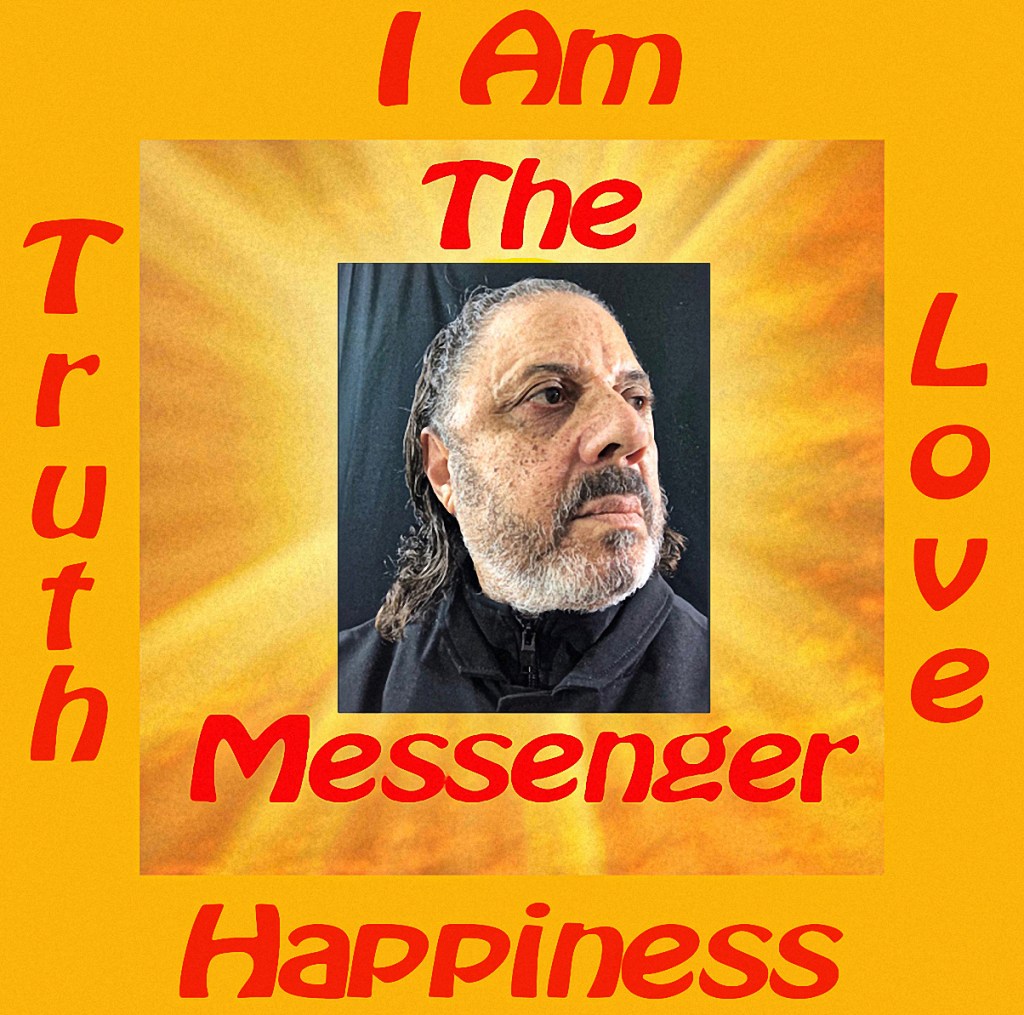
THE MESSENGER

James R. Yarbrough





Thought


What Do They Say To You


Snapshot In Time


I SEE YOU




Community


THE BEAT GOES ON





BLACK MAGIC WOMAN






















You must be logged in to post a comment.